
Inspiration is the other strand that runs throughout genuine play. The mental skill here was defined by the philosopher Aristotle, who pointed out two bad extremes in discussions: being too serious and dull, and being too frivolous — which is dull in its own way. In between these two lies a mental quality Aristotle called eutrapelia, or ‘good-turning’: being able to change direction playfully from serious to fun and back, engaging others in a rich but also light-hearted discussion.¹⁴ Somewhere between the t
At work, “playing” with problems can spur creativity and enhance your critical thinking, speeding up your learning and making you more productive. Play is also a lynchpin of trust, helping you lower your guard and connect with others to forge more resilient relationships. That adaptability often extends to your overall physical and mental health, reducing cortisol (your body’s primary “stress” hormone), decreasing your blood pressure, and increasing your sense of well-being.
Source: Being playful is a biological imperative, even for adults
Summary: People from cultures that frequently engage in conflicts with other cultures tend to play more cooperative games than competitive ones. However, in cultures where there are frequent conflicts within their own communities, there is a greater tendency to play more competitive games.
Source: Those That Game Together, Stay Together – Neuroscience News
“It was also really interesting to see that how the children corrected each other varied by location. To our surprise, children from rural small-scale communities protested as much or even more than children from urban settings. We assumed that, because everyone knows everyone else in small scale communities, direct interventions would be less common, as people could rely on more indirect ways such as reputation to ensure compliance with rules. But we actually found the opposite to be true.
No surprise there’s a strong link between play and learning. As far as we know, every species that isn’t hard-wired with instinctual behavior engages in some forms of play. But who knows? Perhaps someday we’ll discover that ants play a subtle massive multiplayer game.
These findings come at a time when many experts are calling for more play for kids to mitigate the trauma children have experienced during the pandemic. Last year, a report by the LEGO Foundation that looked at 26 studies of play from 18 countries found play is so powerful it can reduce inequality and close achievement gaps between children ages 3 to 6. Those studies, which also looked at free play in addition to guided play, found children progressed in several domains of learning, including language and literacy, math and social-emotional skills.
Source: Kids can learn more from guided play than direct instruction, studies say
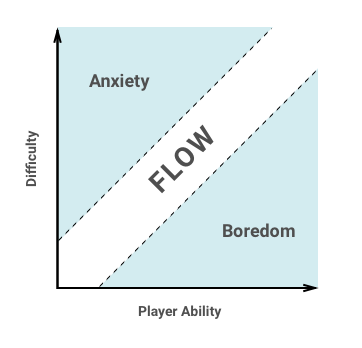
The key lies in our definition of distraction. Screen learning must involve distracting students towards the things that really matter. In education, as in gaming, we can “court risk” without the fear of failing.
Rather than admonishing learners for not focusing when sitting at desks in school or in front of screens, we should work within our distracted world. We need to play with distraction, work with distraction and learn with distraction.
https://theconversation.com/gamers-know-the-power-of-flow-what-if-learners-could-harness-it-too-164943
In my eyes, Malone is an almost perfect example of a non-scrub — a person who saw into the game of business, and played the actual game, not some made-up, more difficult version of the game. Malone’s insight was that he could load TCI up with debt (at a disciplined five-to-one earnings ratio), and then use the interest payments and cable equipment depreciation as a tax shield for TCI’s utility-like, monopoly cash flows. He then used that debt to expand aggressively, gaining scale advantages, until TCI became the largest cable company in the US, owning interests in various cable programming and tech ventures along the way.
https://commoncog.com/blog/playing-to-play-playing-to-win/
In everyday interaction, we spend a large part of our time either trying to fill a role other people expect or want us to fill, or avoiding that role. But a game removes this type-casting stress by telling us exactly what our role is. It gives us an arbitrary alter-ego into which we can escape for an hour and a half. We’re not John or Jane Doe trying to balance career-family-mortgage, we’re Colonel Mustard in the drawing room with a revolver. And we can act accordingly–which means, paradoxically, that we can act more like ourselves.
https://www.psychologytoday.com/us/articles/199807/wanna-play
Even though I was excited to start living more playfully, I explained to Harry that once I returned from work after the holidays and had momentary breaks from the chaos, I just felt exhausted, and in no mood to be playful.
Instead, given a few minutes to do something fun or joyful, I checked my phone, email or social media, probably subconsciously in search of a dopamine hit, or maybe because it felt productive to add to my grocery list or respond to a text message. On the day of the attempted coup at the Capitol, I scrolled for updates as part of my job but also as a concerned citizen.
Source: How to stop wasting time scrolling and start finding joy in play
The philosopher Friedrich Nietzsche once described play as ‘[b]ecoming and dissolution, building and destruction without moral implication, in eternal innocence’ – as an act to be found ‘in the world only in the play of the artist and child’. When I ask my six-year-old Jeanne what happens when we play, she says: ‘If all the children in the world play at the same time, it grows. It grows and grows.’ Playing is like a dream, for, as the poet Paul Valéry wrote in 1914, in dreams ‘we have a combination of EVERY POSSIBLE MEANS of diverse impressions’. Play is an opening of multitudes.
Yet, paradoxically, for all its emphasis on multitudes and freedom, play involves strict rules, making it a skill that can be honed. Various play specialists, such as Fink and the social scientist Roger Caillois, have attempted to define the necessary criteria to reach the state of play, one that Fink describes as bringing light, or ‘day-ing’ the world. According to another play expert, the psychiatrist Stuart Brown, our need to play stems from our biological neoteny: we are the only mammals with an 18-year-old childhood. For Brown, play possesses certain key attributes: it is purposeless, voluntary and inherently attractive, while offering freedom from time, diminished consciousness of self, improvisational potential and continuous desire. When we play, we exist outside of time, and don’t want to stop.
Source: Play is cathartic, allowing people to sit with their shadows | Aeon Essays
Newer Posts